2025 Faculty Research Report
Message from the Associate Dean of Research and Doctoral Programs
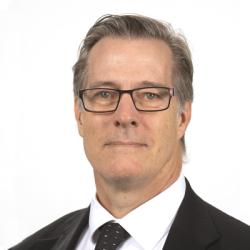
I’m proud to share this new Faculty Research Report, which will give you a taste of some of the groundbreaking work happening at the Isenberg School of Management. Through publishing in and serving in editorial roles for top journals, hosting international conferences, influencing business practice, and forging key partnerships, our faculty continue to demonstrate their commitment to advancing knowledge across business disciplines, in and out of the classroom.
The growing influence of Isenberg’s faculty is reflected in the remarkable increase in publications in premier journals. In 2024 alone, Isenberg faculty were authors 45 times in premier journals, an increase of 50 percent over the previous year. Our faculty’s focus on publishing rigorous, high-impact research ensures that the work done here reverberates through business scholarship and contributes to better outcomes in practice.
Institutional support for faculty success has also expanded, as the number of endowed and titled positions has tripled in the past decade, with 28 individuals holding titles as of 2025.
In addition, the Isenberg community celebrated the grand opening of the Berthiaume Behavioral Research Lab in fall 2024. Equipped with state-of-the-art technologies such as eye tracking, facial expression analysis, and galvanic skin response from iMotions, the lab stands out as the largest of its kind in an academic setting in the Northeast.
I invite you to explore this year’s Faculty Research Report, which highlights just a few of the many exceptional contributions of our faculty. Their work exemplifies the impact and excellence that define Isenberg.
George R. Milne
Associate Dean of Research and Doctoral Programs and the Edward D. Shirley Endowed Professor of Marketing
Isenberg School of Management
University of Massachusetts Amherst
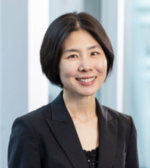
In April, Yoon Ju Kang, PhD, associate professor of accounting and the Richard Dieter MS ‘66 and Susan C. Dieter Endowed Faculty Fellow, was named as the new KPMG Faculty Fellow—a prestigious appointment that deepens her ongoing work on auditor decision making in an evolving professional landscape. The recognition not only honors Kang’s scholarly contributions but also underscores Isenberg’s prominence in audit behavioral research.
Building on her expertise she has developed through her research, Kang will, in her new role as KPMG Faculty Fellow, work with the firm’s U.S. Department of Professional Practice. This collaboration between theory and practice will offer her the opportunity to explore pressing issues in the field alongside leading professionals.
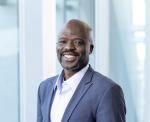
When the Bank of England adopted a new tool to monitor financial market risk earlier this year, its foundation came not from a government agency or a think tank, but from the research of Isenberg Finance Professor Fousseni Chabi-Yo, PhD.
A specialist in asset pricing and empirical financial econometrics, Chabi-Yo developed a novel, forward-looking measure of the equity risk premium (ERP) that now plays an active role in how the bank assesses financial stability. Building on his ERP work, he recently published an intertemporal risk factor model in Management Science that expands the understanding of how equity risk evolves over time.

Muzzo Uysal, PhD, professor in the Department of Hospitality and Tourism Management at the Isenberg School of Management and Carney Family Endowed Professor, is redefining the purpose and impact of tourism. Recently appointed president of the International Academy for the Study of Tourism (IAST), Uysal continues to champion research that advances tourism as a vehicle for quality of life, sustainability, and cultural understanding.
While his academic journey began with a degree in accounting and business administration, Uysal was drawn to the social sciences, their application to tourism and hospitality, and their impact on economic development, cultural exchanges, and community well-being. And, as IAST president, he is committed to advancing a better understanding of tourism.

In elite consulting firms where the pressure to perform never eases, balancing work with a personal life can feel like an impossible goal. New research from Emily Heaphy, PhD, professor of management and John F. Kennedy Faculty Fellow, however, suggests there’s a powerful, under-the-radar alternative to the nonstop hustle.
Heaphy has explored how consultants at a prestigious global firm managed to succeed professionally and personally without burning out or damaging their reputations. Their findings, recently published in Organization Science, reveal a surprising network of what they call “sustainable workers” who quietly—yet effectively—operate under the radar.
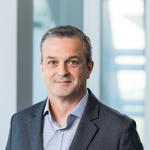
Nicknames are, for the most part, a sign of affection. From “Mickey D’s” to “HoJo,” consumers frequently assign pet names to the brands they love—casual, familiar terms that reflect endearment and connection. But when companies co-opt those nicknames and start using them in their own marketing, the outcome, according to new research by Isenberg Professor Matt Thomson, PhD, is rarely positive.
To explore this phenomenon, Thomson conducted a series of studies using real brands and real-world data and found that when companies use their own nicknames in marketing campaigns, it tends to backfire. He integrates these findings—which were reported on by The Wall Street Journal—into his undergraduate market research class, using the studies to teach Isenberg students the value of experiments and the importance of fieldwork.
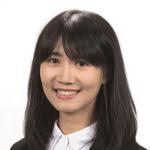
At a time when digital platforms influence nearly every aspect of consumer decision making, Isenberg Assistant Professor of Operations and Information Management Zhanfei Lei, PhD, is uncovering how consumers process and respond to the user-generated content that shapes their choices—especially online reviews.
Professor Lei’s research focuses on the hidden biases and automatic judgments that occur in digital environments. This interest began with a fascination with user-generated content (UGC); during her master’s program, she analyzed trending Twitter (now X) topics using topic modeling, a text-mining technique used to scan a collection of text and automatically group words into themes. That project laid the foundation for her later doctoral work exploring online word-of-mouth, specifically how product reviews influence purchasing decisions.
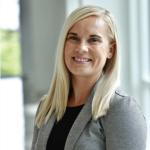
Katie Sveinson, PhD, associate professor and Charles J. Dockendorff Endowed Faculty Fellow in Isenberg’s Mark H. McCormack Department of Sport Management, is redefining what it means to be a sport fan—and who gets counted in the first place.
A longtime fan of Formula 1, football, and tennis, Sveinson’s academic interest in fandom was born from her own experiences. But her research delves deeper, beyond passion, into the complexities of fan behavior, identity, and inclusion.
Sveinson’s work focuses on uncovering dominant assumptions about fandom and offering fresh insights into how sport consumers experience and interpret the world around them.
