Isenberg Online BBA Strengthens Pathway from Community College to Massachusetts Workforce

For Nancy Felix-Vega, earning a bachelor’s degree meant finding a way to continue her education without stepping away from her full-time career and family responsibilities in Massachusetts.
The Worcester resident transferred this fall from Quinsigamond Community College to the Isenberg School of Management’s Online Bachelor of Business Administration (BBA) program at UMass Amherst. She continues to work full time as a business support manager for UMass Chan Medical School’s ForHealth Consulting in Worcester while pursuing her bachelor’s degree in management.
“As an adult learner, starting at Massachusetts community college made completing my bachelor’s degree much more affordable and realistic,” said Felix-Vega, 50. “Through MassReconnect, I was able to complete a large portion of my degree at a much lower cost, and my credits transferred smoothly to Isenberg.”
The MassReconnect program, which launched in fall 2023, offers tuition- and fee-free public community college to Massachusetts residents who are at least 25 years old, and who have not already earned a bachelor’s degree. The program was so successful (with an eight percent increase in community college enrollment just the first year) that in fall 2024 the governor’s office announced an expansion called MassEducate that covers community college students of any age without a bachelor’s degree. Community college students who complete an associate’s degree with at least a B average are guaranteed acceptance to a state university or UMass through the MassTransfer program to pursue a bachelor’s degree.
“All those pieces have made a major difference,” said Felix-Vega. “Without them, continuing my education would have been much more difficult, especially since I was also helping to pay for my daughter’s nursing education at UMass Boston.
“The flexibility of Isenberg’s Online BBA program has also allowed me to continue working full time while earning my degree,” she added.
Felix-Vega’s experience reflects a pathway used by many students in Isenberg’s Online BBA program. Of the students admitted between 2014 and 2024, 85 percent had transferred from a community college, and nearly half—46 percent—were first-generation college students, like Felix-Vega. Since the inception of MassReconnect and MassEducate, those numbers have been rising, and Isenberg’s administrators have thoughtfully developed undergraduate programming to accommodate more transfer students—particularly in the online space.
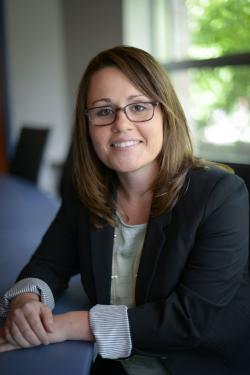
“For students who began their education elsewhere, particularly Massachusetts community college students, Isenberg’s online BBA program provides a realistic pathway to the commonwealth’s flagship university without requiring them to step away from work or other responsibilities,” said Nicole Melton, PhD, associate dean for undergraduate programs and the Berthiaume Family Endowed Professor.
Building Skills for the Massachusetts Workforce
Isenberg’s online BBA offers majors in accounting, finance, management, and operations and information management. Ranked No. 4 nationally among online bachelor’s in business programs by U.S. News & World Report for 2026, the program combines the flexibility of online learning with access to Isenberg and UMass Amherst resources, career services, job opportunities, and the school’s alumni network. Courses are offered through the calendar year, giving students greater control over the pace of their education.
The program also supports Massachusetts workforce development by helping students build skills in accounting, analytics, finance, management, operations, technology, and decision making that can be applied across industries. Because students can remain employed while completing their degrees, they can apply what they are learning directly within Massachusetts businesses, nonprofit organizations, public agencies, and other workplaces.
Early in her Isenberg studies, Felix-Vega has a clear sense of how she hopes to apply her education in the workplace.
“I reached a point in my career where I felt I had hit a ceiling and needed additional skills and education to move into higher-level leadership roles,” she said. “I see a real need for stronger data analysis and reporting within my current work environment, and I would like to build the skills to help fill that need.”
She plans to combine her years of professional experience with what she is learning at Isenberg to advance her career while contributing more to her organization and the Massachusetts workforce. She is also considering Isenberg’s Master of Science in business analytics as the next step in her academic journey.
The multiple options available to students reflect Isenberg’s responsibility as part of the commonwealth’s flagship university to expand access to business education, support degree completion, and prepare graduates to meet the needs of Massachusetts employers and communities, according to Isenberg Dean Anne Massey, PhD, the Thomas O’Brien Endowed Chair.
“Isenberg is committed to creating pathways that help Massachusetts residents earn their degrees and contribute to the strength of the Commonwealth of Massachusetts,” said Massey. “By connecting the affordability of community college with the flexibility and resources of our Online BBA program, Isenberg is expanding access to a high-quality business education while preparing talented graduates to support employers and communities across Massachusetts.”
Flexibility for a Changing Student Population
The online courses also benefit residential UMass Amherst students by helping them accelerate their progress, catch up on degree requirements, pursue internships, and complete coursework while away from campus—including while studying abroad.
“By coordinating online offerings more intentionally across majors and academic terms, Isenberg is creating one undergraduate ecosystem with multiple points of entry and multiple pathways to completion,” said Melton.
Although Isenberg’s Online BBA population has in the past been primarily non-traditional students (the average age of those admitted between 2014 and 2024 was 35), enrollment data show changes in recent years. This is possibly a result of the commonwealth’s efforts to support community college students.
“Expanding access is only part of this responsibility,” said Melton. “We also need to help students turn that opportunity into a completed degree. That means building an undergraduate experience that recognizes different starting points and supports students as their goals and circumstances change.”
