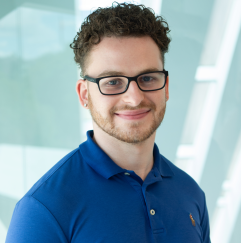
Isenberg Accounting Professor Continues Leadership in Forensic Accounting

Lynda Schwartz is a professor of practice in Isenberg’s accounting department and the director of the forensic accounting and data analytics curriculum. A longtime leader in her profession, she has been highly involved with the AICPA (American Institute of Certified Public Accountants) over the years. Most recently, she was appointed to a three-year term on the organization’s Forensic and Valuation Services Executive Committee after completing her terms as the chair of the Certified in Financial Forensics Committee and the Joint Trial Board.
“The accounting profession is so rich and varied,” said Schwartz in an interview. “Lots of people think that it’s just dull bookkeeping, but they couldn’t be more wrong. Whenever I’ve gotten bored or wanted something new to work on, a new engagement or opportunity helped reenergize me and stretch my skills and capabilities.”
Schwartz answered questions for us about her specialty, forensic accounting, which focuses on legal disputes or fraud matters.
How did you get into the world of forensic accounting and valuation services, and how did it become your specialty within the profession?
When I left Isenberg as an accounting graduate in the mid-80s, the big accounting firms didn’t have forensic accounting practices. The specialty was just starting to develop in the market. I started in one of the big accounting firms as an auditor and earned my CPA.
After a few years, I really needed a change. The firm was looking for an experienced senior who would work with a partner who was starting a “litigation support” practice. I thought maybe I’d go to law school, so I stuck my hand up. I loved the work and never ended up going to law school. Instead, I stayed with EY for 26 years and served as a partner in their forensics practice for 13 years. For the last decade, I have maintained an active forensic accounting practice through my own small firm.
When I first started working in forensics, there were fewer than five of us in Boston. At the first national meeting of the forensics group, the entire U.S. practice fit in a small conference room. By the time I left the firm, there were thousands of people working in forensics in the United States and globally.
Building a practice from its infancy gave me so many opportunities to learn and grow. I was an “in-trepreneur”: figuring out market strategy, building teams, and hustling for new clients. I was a generalist, handling a diverse set of cases. I investigated school systems, looked for embezzlement in family businesses, analyzed funds flows in the Enron scandal, analyzed health care billing frauds, reconstructed financial records, interviewed witnesses and alleged fraud perpetrators, analyzed a billion dollar Ponzi scheme, helped audit teams respond to allegations of fraud, and more. Sometimes, I serve as an expert witness in court or in arbitrations. Sometimes, I serve as an arbitrator of business disputes. Other times, my work is entirely behind-the-scenes. Most of the work is time-sensitive and detail-oriented. I’ve served as a forensic expert in cases where hundreds of millions or even billions are at issue. It can be heady stuff!
I got into this work by chance, at a time when the market for forensic accounting services was growing and becoming more well-understood by accountants and by clients alike. I grew as a professional at the very same time that the profession was maturing. I’d say it was the best time to enter the profession, but that would be wrong. The best time to enter is now!
Can you tell me more about the FVS Executive Committee? What does it do as a whole, and what will your role as part of the committee look like?
I’m still learning what my role will entail! Usually, committee members collaborate with one another to work on projects within the committee’s orbit, like work to develop professional standards, guidance, or other resources for those entering the profession and for current practitioners. I hope my work will have lasting impact and promote high-quality work and ethical conduct in the delivery of forensic services. My goal is to support not just practitioners and those entering the profession, but also our clients and other stakeholders who rely on our work.
Can you tell me more about the work you did on the CFF Credential Committee and the Joint Trial Board?
I recently completed a three-year term as the chair of the AICPA’s Certified in Financial Forensics (CFF) Credential Committee. CFF credential holders are CPAs with training and expertise in financial forensics. The committee is made up of professionals with subject matter expertise who oversee the credential, including building and maintaining the CFF examination and the pathways for applicants to learn and earn the credential. I am especially proud of the launch of a new pathway for experienced professionals to gain the credential, for our work to build stronger connections with universities that have forensics programs and for the work to help people study for the exam and become CFFs.
I also completed a six-year term on the AICPA’s Joint Trial Board, including one year as the Chair. The Joint Trial Board adjudicates matters of professional discipline within the AICPA membership throughout the United States. Members who have been accused of failure to follow professional standards or quality review standards may be brought before the Joint Trial Board. Members of the board serve as hearing officers and render judgment on these cases. It’s an important way that CPAs hold each other to high standards of professional conduct and discipline members who fail to meet our standards. I’m proud to have served as part of the profession’s self-regulatory function.
Can you tell me more about forensic and valuation services overall? What does this type of work look like, and how does it fit into the accounting profession overall?
Forensic accounting and valuation are specialty areas within the accounting profession. “Forensic” means intended for use in a court proceeding. So, forensic accounting is all the kinds of accounting work that relate to legal disputes or fraud matters that might go to court. We work on all these engagements so that the work is ready to go to court, even though lots of matters are settled or resolved outside of the courtroom.
As a forensic accountant, I’ve worked on fact-finding and analysis for fraud-related matters, like allegations of embezzlement, financial wrongdoing or failure to comply with regulatory requirements. I’ve worked in almost every industry in New England. Some of the matters under investigation hinge on small amounts or details, like a small bribe payment. Others can involve millions or billions of dollars, like a large Ponzi scheme or financial statement manipulation.
I’ve also worked on many business disputes. When one party breaches a contract or is alleged to have harmed another party, there can be complex questions about what happened and the amount of the monetary impact of those allegations. Someone needs to pull together that analysis and communicate it to judges and juries. I’ve served as an expert witness in Massachusetts state court, in federal courts, and in arbitration matters. It’s not exactly like the courtroom dramas on TV, but the work can be stressful and intense. I’m always proud to be able to help judges and juries understand the technical information that accountants take for granted and help make a complex financial picture clear. That allows these people to reach good decisions that are fair and just.
In business valuation, professionals analyze and determine the value of ownership interests. When public companies trade on an exchange, the market value of a share of stock is easy to figure out. For private companies and certain ownership interests that do not have a ready market value, the determination of value takes skill and professional judgment. Valuation professionals help people who are buying and selling business and ownership interests, reporting those values in financial statements, and for certain tax reporting. Getting an objective, professional determination of value can help those owners realize their business and personal goals.
How can young accountants and accounting students get more information about this aspect of the field? Do you recommend that they pursue work in this field?
Take my classes!
MGMT-620 is designed to be a great entry point for people who want to develop a working knowledge of the landscape of forensic accounting, including forensic data analytics. MGMT-621 is a deeper dive into fraud examination and investigation.
I always tell my students that the backbone of my career has been my CPA credential. I encourage accounting students who are willing, able, and interested in forensic accounting to get their CPA. Specialized forensic credentials, like the CFF or the Certified Fraud Examiner credential, both of which I hold, are valuable but none are as helpful and well-recognized as the CPA.
That said, there are pathways into forensics that do not require a CPA. If you are interested, I can help. Reach out to me by email. That’s why I’m here at Isenberg!