Indika Dissanayake: Inside My Research on Innovation Beyond Organizational Boundaries
For decades, organizations relied primarily on internal teams, domain experts, and consultants to generate ideas, solve problems, and get work done. Today, digital platforms are reshaping this landscape by enabling individuals, organizations, and communities to tap into knowledge, expertise, labor, and ideas from geographically dispersed and often unaffiliated participants—collectively referred to as the crowd.
Consider just a few situations where crowd-based systems are transforming how problems are solved, services are delivered, and value is created:
- A company is searching for its next breakthrough product
- A patient is seeking insights into a complex medical condition
- A city is collecting real-time information from residents
- An organization is looking for specialized expertise.
What makes these crowd-based systems effective and how they can be designed to achieve successful outcomes? That is the focus of my research.
In recent work published in Information & Management, my coauthors and I argue that the traditional understanding of crowdsourcing no longer captures the diversity of crowd-based platforms that exist today. We propose a broader definition of crowdsourcing as “an activity of obtaining value from a loosely organized group of people (crowd).” This perspective reflects the reality that crowd-based systems now extend far beyond microtasking platforms such as Amazon Mechanical Turk or observational crowd systems that rely on citizen-generated data. They also include innovation competitions, idea-generation communities, peer-support networks, and many other forms of digitally enabled collaboration.
Crowd Ecosystems
A central insight that runs throughout my research is that crowd-based systems are best understood as ecosystems rather than standalone technologies. These ecosystems bring together organizations or individuals seeking solutions, crowds contributing knowledge, expertise, and labor, and digital platforms that facilitate and coordinate interactions. Their success depends not on any single component, but on how effectively all parts of the system work together.
This ecosystem perspective has shaped much of my research on online innovation contests. Platforms such as Kaggle provide a unique environment for observing how thousands of participants compete, collaborate, and solve complex problems in real time. While attracting a large crowd can increase the likelihood of uncovering exceptional solutions, crowd size alone is not enough to ensure success. My research takes a holistic approach, examining how prize structures, problem complexity, competition and collaboration among participants, platform design features, and solver behaviors interact to influence the quality of outcomes. By understanding these interdependencies, we can design crowd-based systems that more effectively harness collective intelligence and consistently generate better solutions.
AI Joins the Crowds
Today, however, a new and increasingly important question is emerging: What happens when artificial intelligence (AI) becomes an active participant in these ecosystems?
My current research explores how generative AI is transforming crowd-based systems. AI tools are becoming increasingly capable of generating ideas, evaluating solutions, filtering information, and coordinating activities that were once performed exclusively by human participants. As these capabilities continue to advance, both researchers and practitioners must rethink how crowd-based systems are designed, governed, and managed.
For business leaders, the challenge is no longer simply deciding whether to leverage crowds. Instead, it is understanding how to create systems in which people, platforms, and increasingly intelligent technologies can work together effectively and productively.
As digital platforms continue to evolve, the future of innovation may depend less on identifying the smartest individual and more on designing ecosystems capable of harnessing collective intelligence at scale.
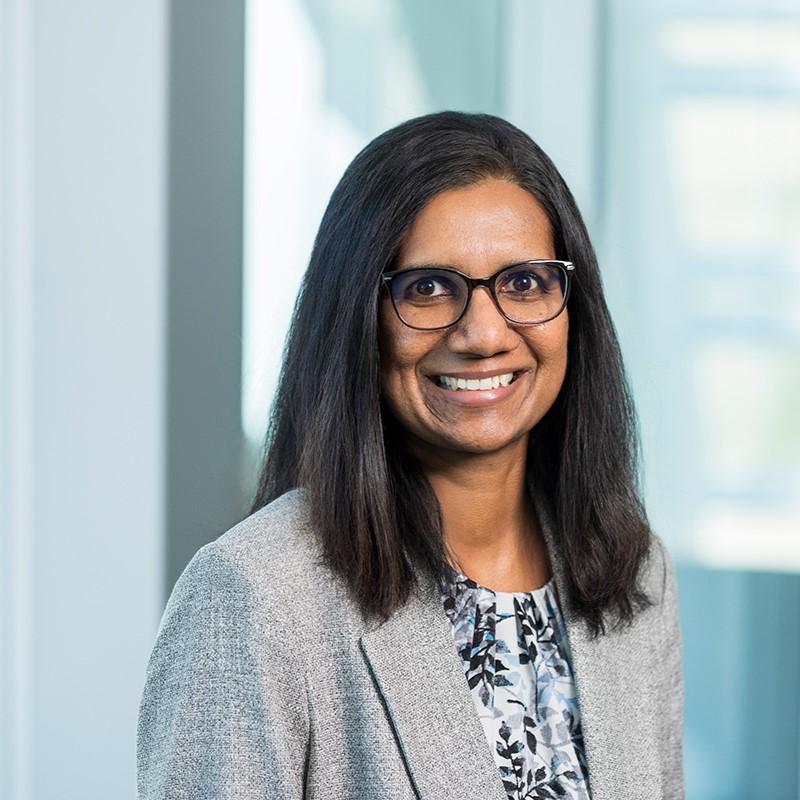
Indika Dissanayake, PhD, is an associate professor in the Department of Operations and Information Management at the Isenberg School of Management at UMass Amherst.