HTM Undergraduate Student Makes His Mark at Hotel UMass
At many hotels and resorts, a Standard Operations Procedure (SOP) manual is a one-stop shop for information on any tasks that employees might need to perform, from checking in guests to emergency procedures. But prior to 2025, Hotel UMass didn’t use one.
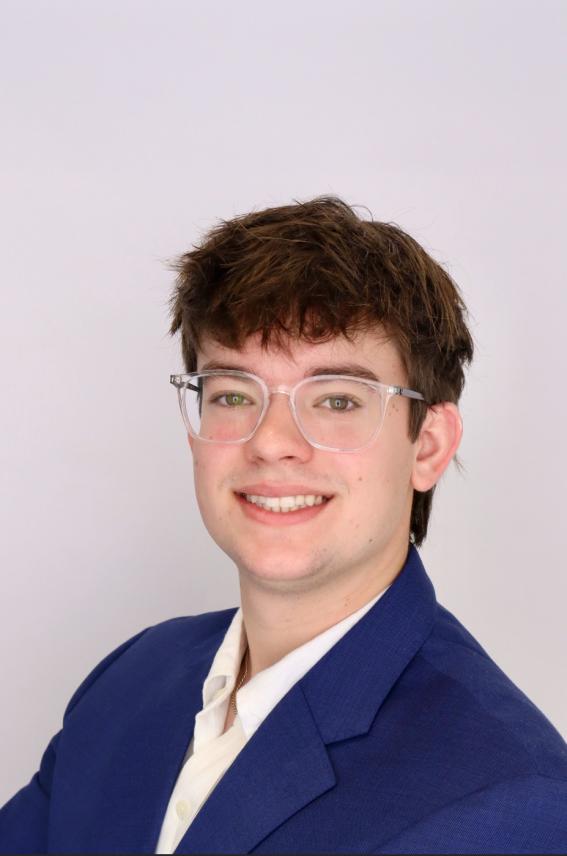
That changed when Brady Kerwood ’27 started his internship at the hotel in January 2025 and created an SOP that is available to all staff to help ensure that every customer receives the same high standard of service.
“We now have a teachable document that all of our staff can reference when unique situations arise, whether they’re new or seasoned,” said Chandrick Hayes, director of Hotel UMass. “From day one, Brady was a step ahead with his ideas and his customer service prowess.”
Kerwood, a hospitality and tourism management (HTM) and finance double major, says he learned about the utility of SOPs in conversation with Hayes, who had used the manuals at other properties.
“I asked why Hotel UMass didn’t have one too, and he couldn’t really see any reason,” Kerwood said. “Things just quickly expanded from there as we continued to discuss it, and it eventually resulted in this great internship and learning experience.”
A Strong Foundation
In working to create an SOP manual for Hotel UMass, Kerwood paired his knowledge from the classroom with his real-world practical experiences to develop a modern manual that remained relevant to the hotel’s existing practices and standards. “I came up with a very rough blueprint of areas that needed to be covered, such as the check-in process, and then I combined what I knew about the hotel’s current procedures with what I was learning in class and the current industry standards,” said Kerwood. “It all resulted in a hybrid SOP that retained the hotel’s baseline operations, but improved them with a more modern, current touch.”
The work has had a positive impact on the hotel’s operations, according to Hayes: “SOPs act as a crucial training tool and operational blueprint.”
Kerwood’s approach kept the manual approachable to hotel employees who were familiar with a certain way of doing things, while still streamlining and improving workflows. “My educational experience within the HTM program definitely helped to set me up well for this project,” he said. “The program’s coursework is so relevant and draws on practices, trends, and other things that are happening in the hospitality industry all over the world right now. I don’t think this experience would have been as much of a success without that background.”
The Isenberg HTM department focuses on preparing students who will implement just this type of real-world business solution, says Melissa Baker, department chair, professor, and Jaime ’76 and Cindy Pereira Faculty Fellow. “This project shows how the HTM department’s partnership with Hotel UMass and UMass Dining opens doors for students to contribute in meaningful, lasting ways,” she said. “At Isenberg, students aren’t just learning about the industry—they’re shaping it. It’s another example of how education and industry thrive when working hand-in-hand.”
Long-Term Success
Kerwood also cited the new connections he made as part of his internship as a huge benefit. “One big highlight was getting to meet and work with upper-level UMass management, and not just within the hotel. I also got to work with the director of conference services, the director of procurement, and the associate vice chancellor for Auxiliary Enterprises. These are connections that I’ll hold with me throughout my professional career.”
The hotel’s leadership also sees Hotel UMass’s partnership with the HTM department as mutually beneficial. “HTM students bring a wealth of educational experience that we can utilize, both to make the hotel better and to provide real-world experience for students,” Hayes said. “I love having the ability to give back to our future hospitality leaders.”
Baker added, “Our program thrives on hands-on learning, and this achievement proves why. This is what sets Isenberg HTM apart—students don’t just study best practices, they build them.”
Kerwood has found that making the most of the connections and opportunities that Isenberg can provide has enhanced his college experience so far. “I think that finding an on-campus job or internship that’s relevant to your coursework is so valuable, because it doesn’t just enhance your professional knowledge—it also has a big impact on your soft skills, like time management. What’s great about the HTM department and about Isenberg overall is that they make these opportunities so easy to access. Everyone genuinely wants to help you. The opportunities that I’ve had access to through the department have been incredible.”