Message from the Coordinator

The Information Systems (IS) PhD takes a theory-inspired and practice-engaged approach to research, in order to understand how individuals, organizations and communities develop, design, use, and are affected by, information systems. We want our doctoral students to investigate relevant and interesting IS phenomena grounded in the IS discipline, and be intellectually curious, rigorous, critical and creative in their approach to research problems and research designs.
Research in our program targets the intersection of (1) implementation, design, and use of information systems, and (2) business and societal domains of their application, to produce research that can make a difference to theory, and practice and/or policy making. Our faculty’s research encompasses on a variety of technologies (e.g., ranking algorithms, social media and AI applications), domains of application (e.g., online communities and algorithmic work), and methods (experiments, secondary data analysis, surveys). Our course work focuses on a strong theoretical and methodological foundation in the IS discipline, combined with an understanding of how IS are applied to the pressing issues of our time. We investigate research problems that can make a difference to organizations and/or society, bringing to bear methods that combine the power of different kinds of data. Our goal is to develop outstanding researchers and teachers who will make substantive contributions to scholarship and knowledge creation, and to place them in academic research institutions.
Our doctoral program is successful because it offers:
- World-class faculty who actively research, publish and shape-steer the scholarship in the top IS journals
- Collaborative and creative intellectual community that supports doctoral student scholarly development
- Comprehensive, rigorous and relevant coursework that equips students with the theories, concepts and methods needed to investigate IS problems
- Individual attention from multiple faculty members to support students in early research endeavors and multiple publication opportunities
- Preparation for the IS academic job market
- Exposure to the IS research community from around the world through support for traveling to international conferences (AMCIS, ICIS, HICSS, ECIS, etc.) and on-campus research talks
We welcome applications from individuals who have a strong academic record, are eager to investigate, why and how IS are developed, deployed and used, and aim to pursue a scholarly career in academia. Relevant industry experience can be an advantage, but it is not a must.
Monideepa Tarafdar
Charles J. Dockendorff Endowed Professor and PhD Coordinator in Information Systems
At a Glance
- World-class faculty who actively research, publish and steer scholarship in the top Informations Systems journals
- Access to Berthiaume Behavioral Research Lab with eye-tracking, facial analysis, and GSR technology
- Quality, personalized mentorship with 1:1 student-to-faculty ratio
- Guaranteed graduate assistantship funding and benefits for 5 years
- Assistantships around $40,000+ per year
- Opportunities to learn from top scholars, with research faculty bringing diverse expertise
Application Deadline: December 15
Reach out to PhD Coordinator Monideepa Tarafdar at mtarafdar@isenberg.umass.edu for more information.
Faculty work alongside doctoral students on a variety of projects, publishing in top-tier information systems journals. Recent projects include:
- How Merge Timing and Repeated Merging Shape Team Performance in Crowdsourcing Contests
- The Relationship Between Memes and Trust in the Context of use of Memes in Healthcare Messaging
- Control Models in Digital Platform Work
- The Relationship Between Emotions and Systems Latency
- Information Quality in Large Language Models’ Outputs
- The Interplay of AI Disclosure Source and Content Type on User Engagement in Short Videos
- Cognitive Approaches and Information Quality in Large Language Models
- Influence of Social Media Engagement in Corporate Philanthropy Communication
Students work closely with their advisor and the full faculty team, gaining a strong foundation through diverse perspectives. Gain opportunities to learn from top scholars, with research faculty bringing diverse experience.
Students generally complete a PhD in Information Systems within 4-5 years, beginning their studies in the fall semester. Students must take 45 credits of coursework, building foundational knowledge in information Systems and Research Methods before taking minor and elective courses. The program includes a first year core exam (summer paper); a comprehensive examination generally taken after completing the second year; a 3-course teaching requirement and a dissertation.
Amherst, Mass., is a quintessential New England college town, with scenic surroundings that include mountains, trails, and four-season outdoor recreation. Learn more about the Western Massachusetts experience.
Roadmap: Degree Timeline
Your roadmap to a PhD—designed to help you make a lasting impact through research and scholarship.
Years 1 & 2: Coursework
- Students complete 45 credits of coursework and milestone exams, building a foundation in information systems theory and research methods
- Flexibility to customize much of the curriculum across the university
- Sample courses:
- Seminal Readings in Information Systems Theories
- Seminal Readings in Information Systems Methods
- Regression & Advanced Modeling
- Predictive Analytics & Machine Learning
- Qualitative & Mixed Methods
Years 3 & 4 : Dissertation & Teaching
- Focus on dissertation proposal, research, and defense
- Teaching requirement up to three to four courses, gaining valuable classroom experience
Academic Careers & Alumni Insights
Our alumni have gone on to faculty careers at:




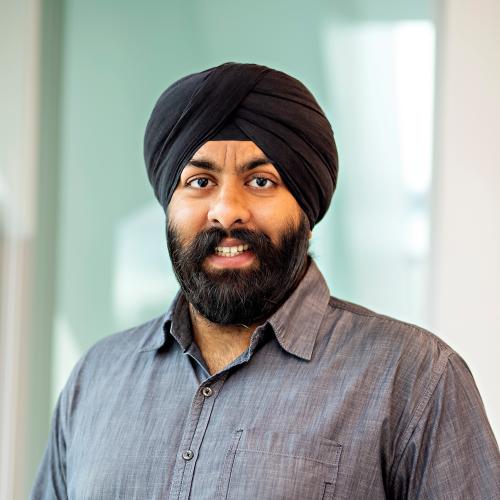
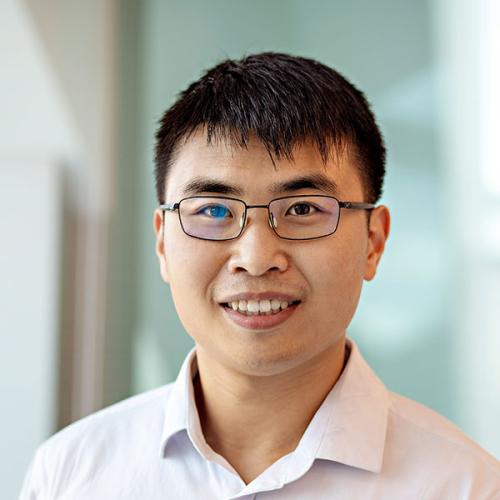
IS Doctoral Candidates

Learn More
Take the next step by contacting our admissions team!
To apply, you'll need:
- GRE or GMAT scores
- Official transcripts
- Personal statement and resume
- Short essay response
- Letters of recommendation
- English proficiency scores (if applicable)
For questions, contact doctoral_program@isenberg.umass.edu.